From Atom to Organism + What the Body Needs to Sustain Life: The Basics
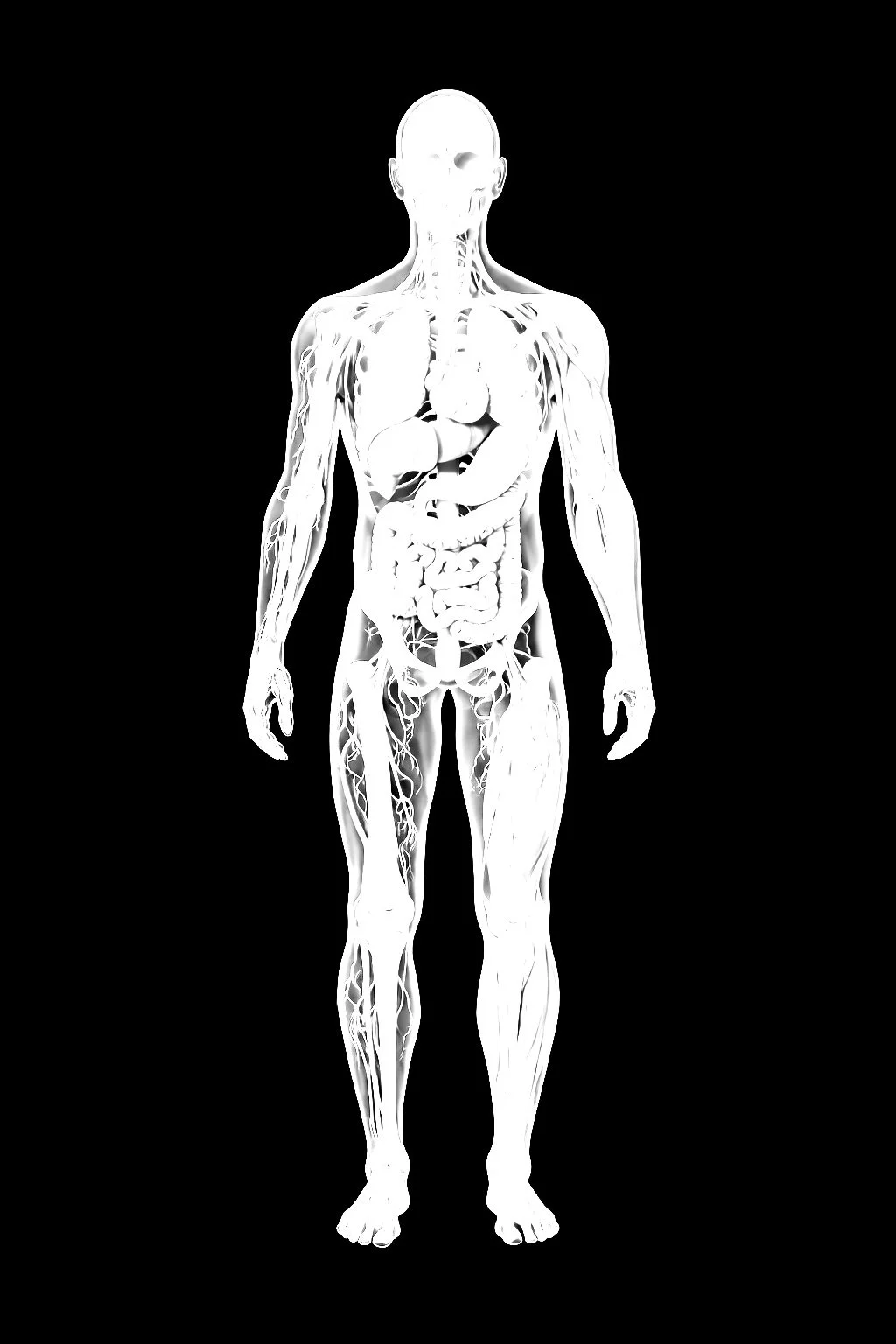
Image generated using AI.
The Basics of Becoming an Organism
The body begins on a chemical level as atoms come together and become molecules, which then “form organelles that are the basic components of cells. Cells are the smallest units of living things” (Marieb & Hoehn, 2022, Section 1.2).
From the cellular level, cells become more specialized in how they function, becoming tissues, and then organs. The tissue and organ levels lead to the organ system level, which includes: (Marieb & Hoehn, 2022, Section 1.2)
integumentary system
skeletal system
muscular system
nervous system
endocrine system
cardiovascular system
lymphatic system
respiratory system
digestive system
urinary system
reproductive system
In becoming an organism, the organismal level is attained when everything is in harmony, meaning “all structural levels [are] working together to keep us alive” (Marieb & Hoehn, 2022, Section 1.2).

Image generated using AI.
What the Body Needs to Sustain Life
The human body requires a barrier between its internal and external environments, and it must be able to move and respond accordingly. Digestion and metabolism are essential for processing nutrients and generating “energy-rich molecules that power cellular activities” (Marieb & Hoehn, 2022, Section 1.3), respectively, while excretion eliminates unneeded waste. The ability to grow and reproduce are also considered “necessary life functions” (Marieb & Hoehn, 2022, Section 1.3).
To survive, certain needs must be met. These pertain to:
nutrients
oxygen
water
body temperature
atmospheric pressure
While they have an important role in regulating the body and its functions, “the mere presence of these survival factors is not sufficient to sustain life. They must be present in the proper amounts. Too much and too little may be equally harmful. . . Also, while the needs listed here are the most crucial, they do not even begin to encompass all of the body’s needs” (Marieb & Hoehn, 2022, Section 1.3).

Image generated using AI.
Homeostasis: Importance of Maintaining Balance
As it relates to sustaining life, balance is critical. “Walter Cannon, an American physiologist of the early twentieth century, spoke of the “wisdom of the body,” and he coined the word homeostasis to describe its ability to maintain relatively stable internal conditions even though the outside world changes continuously” (Marieb & Hoehn, 2022, Section 1.4).
In basic terms, homeostasis relies on the body sensing change, communicating information, and responding appropriately. This is accomplished through mechanisms that regulate a specific variable, defined as “the factor or event being regulated” (Marieb & Hoehn, 2022, Section 1.4).
It is important to note that “although the literal translation of homeostasis is “unchanging,” the term does not really mean a static, or unchanging, state. Rather, it indicates a dynamic state of equilibrium, or a balance, in which internal conditions vary, but always within relatively narrow limits” (Marieb & Hoehn, 2022, Section 1.4).
References
Marieb, E. N., & Hoehn, K. (2022). Human anatomy & physiology (11th ed., Global ed.) [E-book]. Pearson Education Limited.